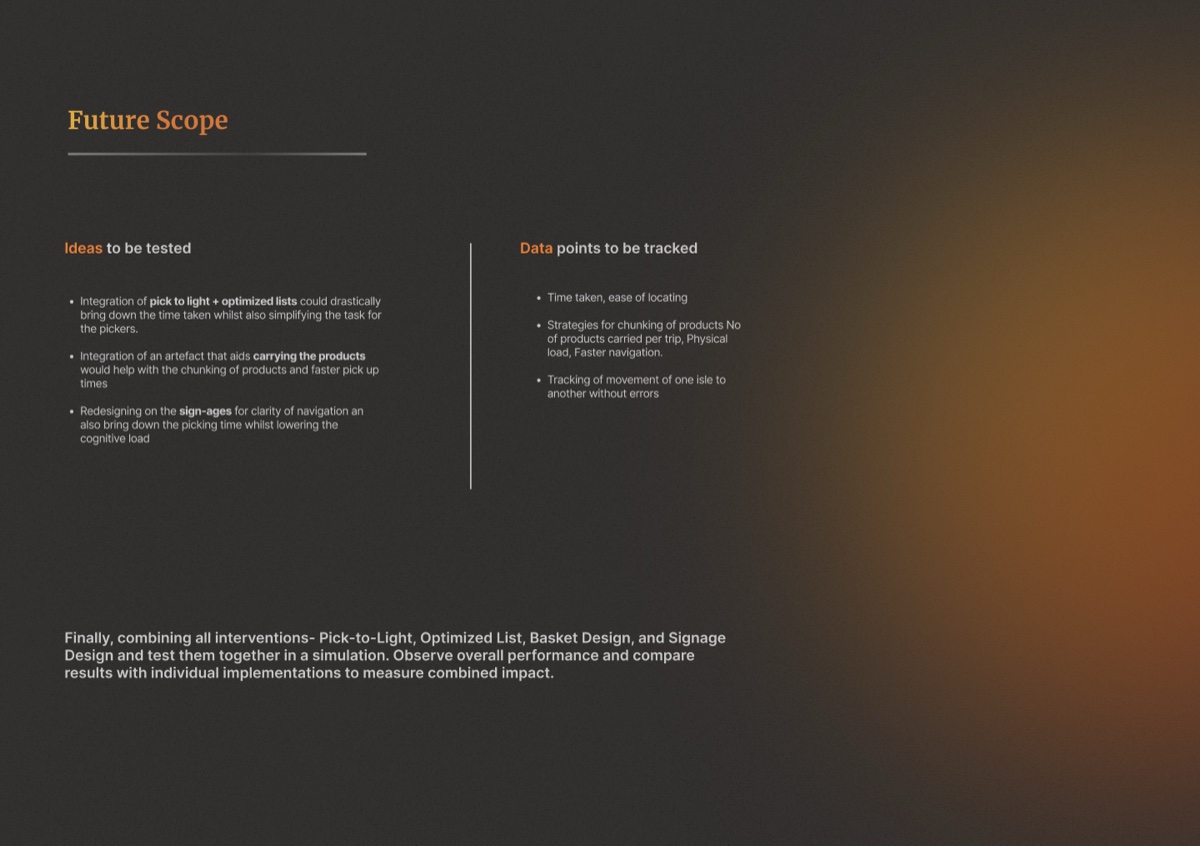
Last Mile Inside: Rethinking Operational efficiency in Darkstores
Observations w.r.t. Workload, Work Process
Key Findings
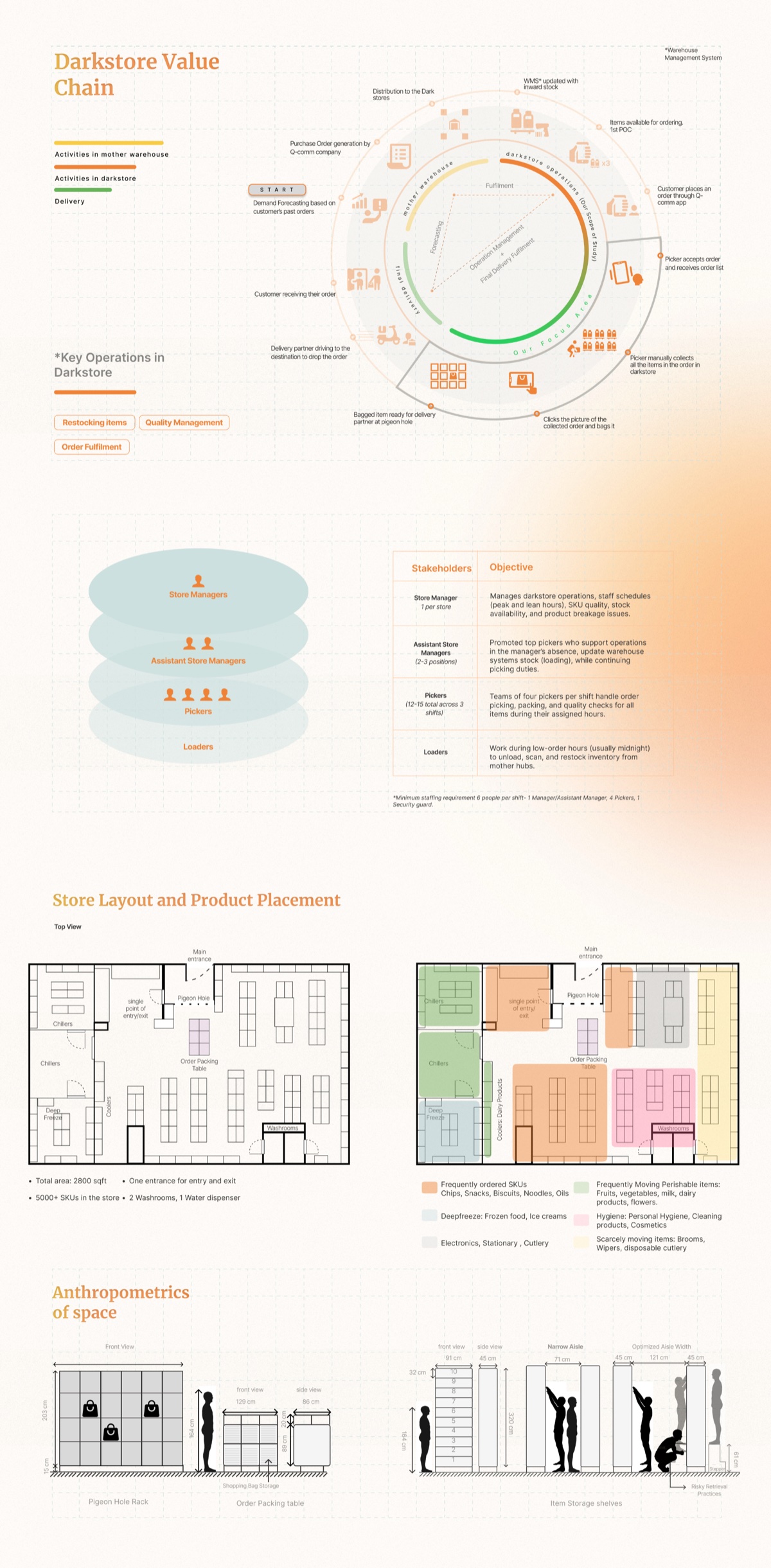
Store Layout: The store spans 2,800 sq. ft. with only one main point of entry and exit, creating potential accidental disasters.

Temperature Fluctuations: Frequent shifts between temperature zones (freezers, chillers) cause discomfort and physical strain, impacting picker efficiency and well-being.


Lack of a designated rest area forces staff to eat and rest in aisles, reducing comfort and recovery.

Passage Widths: Non-standardized widths ranging from 28 to 50 inches create inconsistent ease of movement, contributing to collisions between Pickers in busy areas.

Environmental
Most frequently ordered 1500 SKUs placed near the centre packing table

Overhead Shelf Accessibility: Stepper stools are available to improve visibility and access to overhead items.
Movement & Posture: Fast-paced item collection leads to frequent sprints, causing physical fatigue and straining posture over time.
Product Handling: Heavy baskets strain fingers; repetitive scanning and rescans increase wrist fatigue and risk of injury.
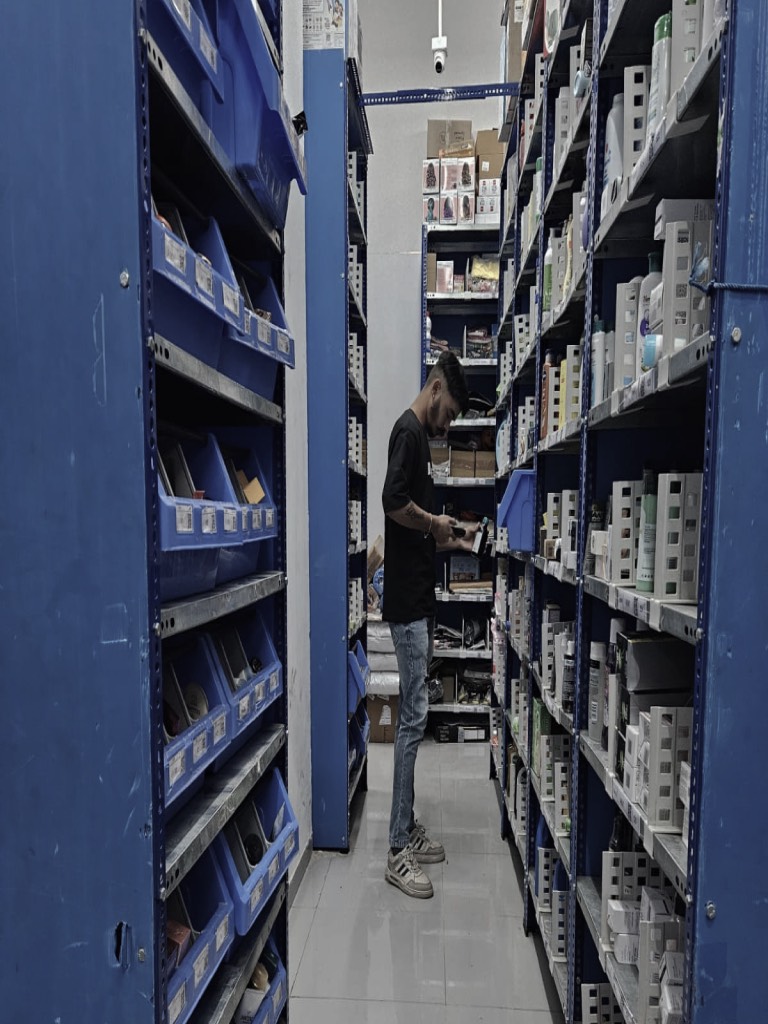
Tools Usage: Using stepper stools in narrow isles hinder its use, leading pickers to adopt risky manual retrievals and potential physical strain.
Idle Time: Pickers prefer standing during idle time to stay alert, but prolonged standing often leads to fatigue.

Physical


Cognitive
Audio Prompts & Vigilance: Constant alerts about new orders disrupt focus, causing mental overload and reduced cognitive balance.

Temporal
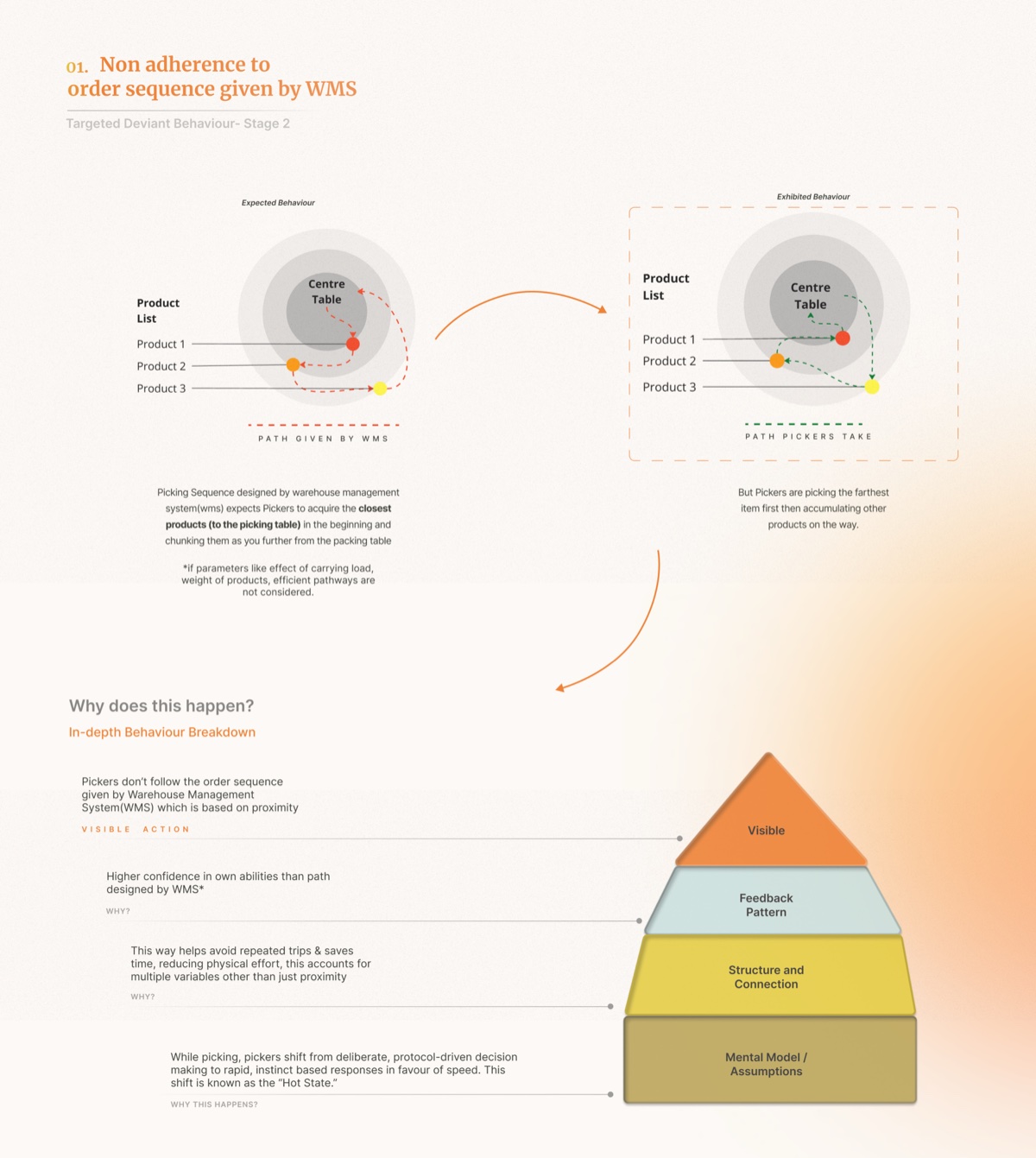
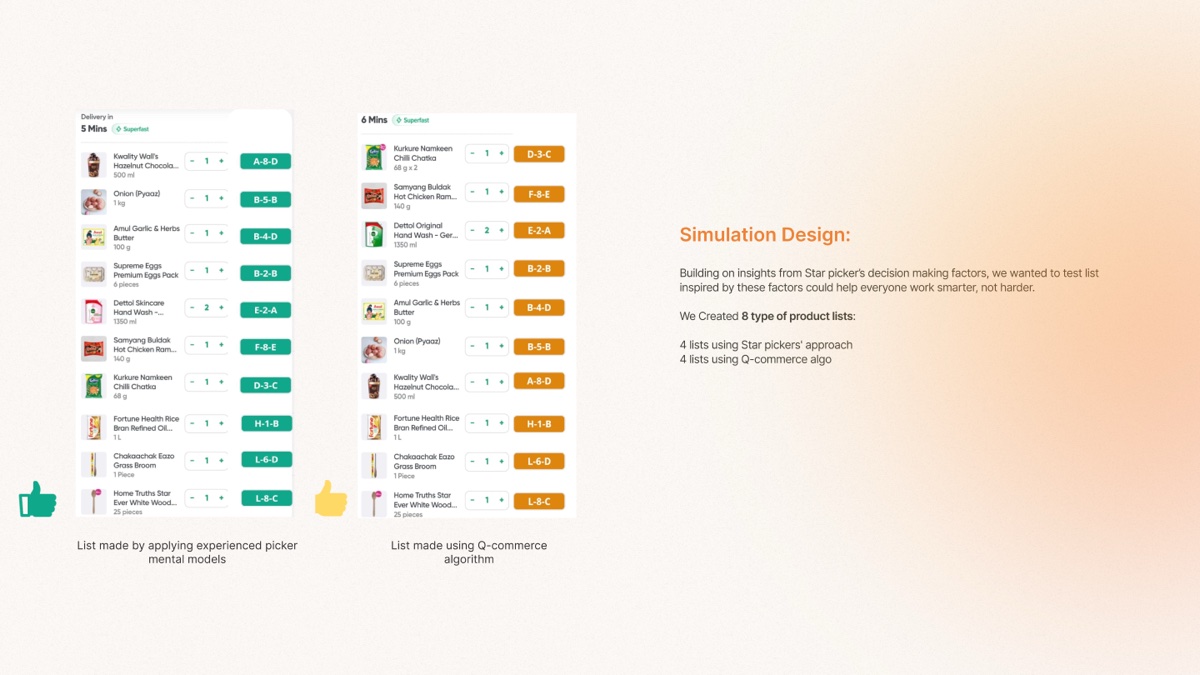
Picking Sequence Variability: Most Pickers follow an optimised company given algorithm to pick orders in a certain sequence.
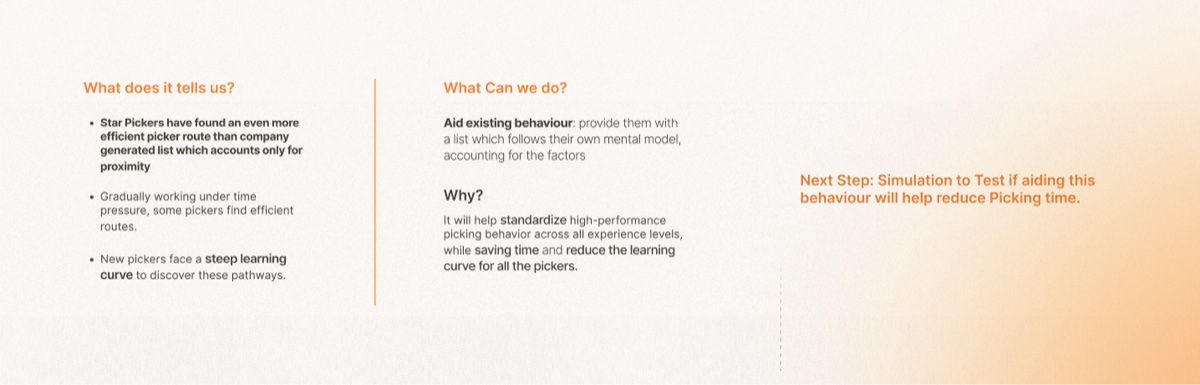
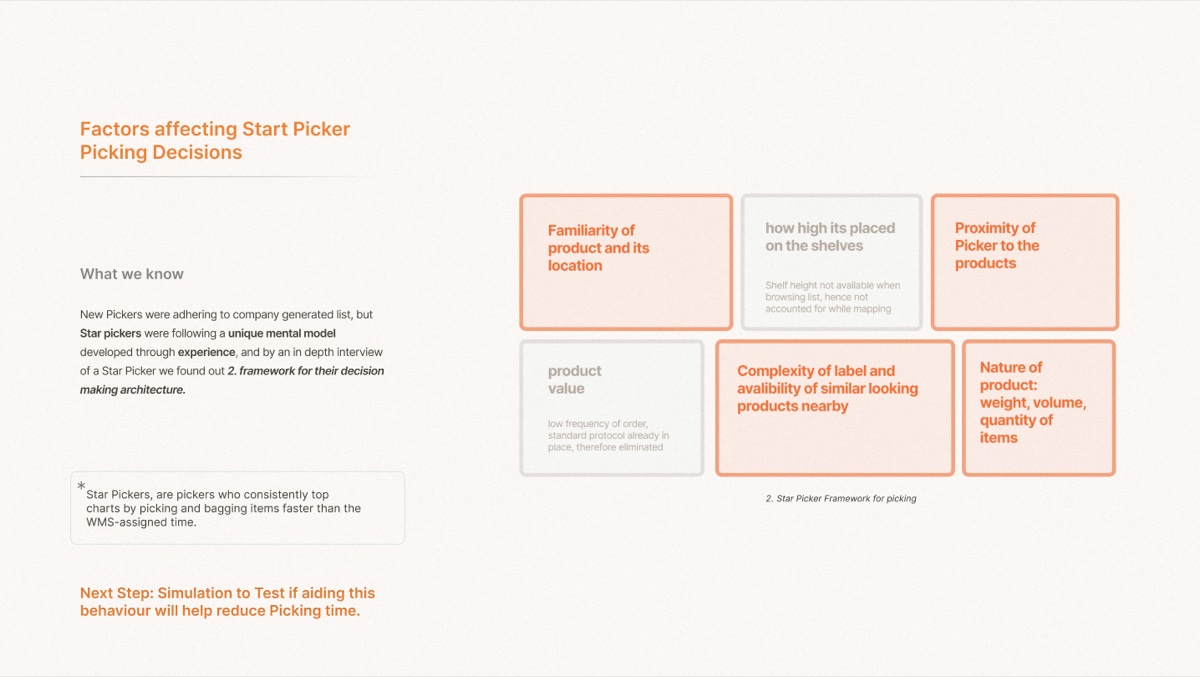
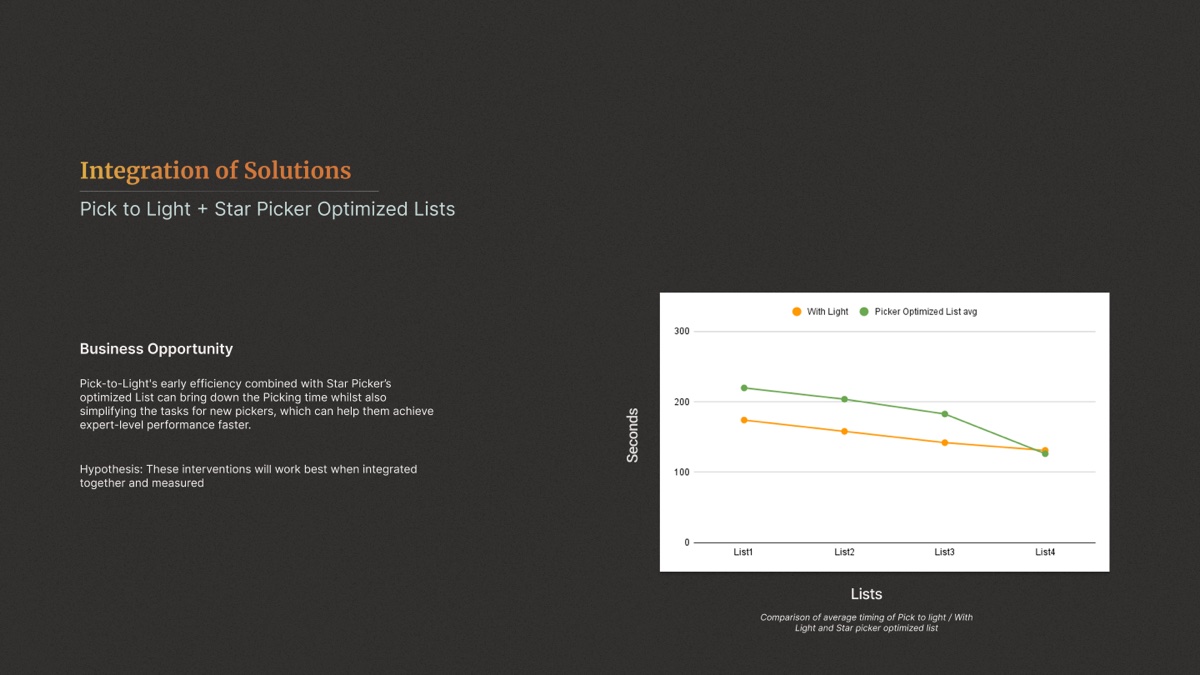
Picking Sequence Variability: Some pickers don’t follow this sequence, and have developed their own algorithm, which is faster and more optimised.
Pickers Collaborative Cognitive Load:
Helping peers eases task load but adds distractions and demands higher mental coordination.
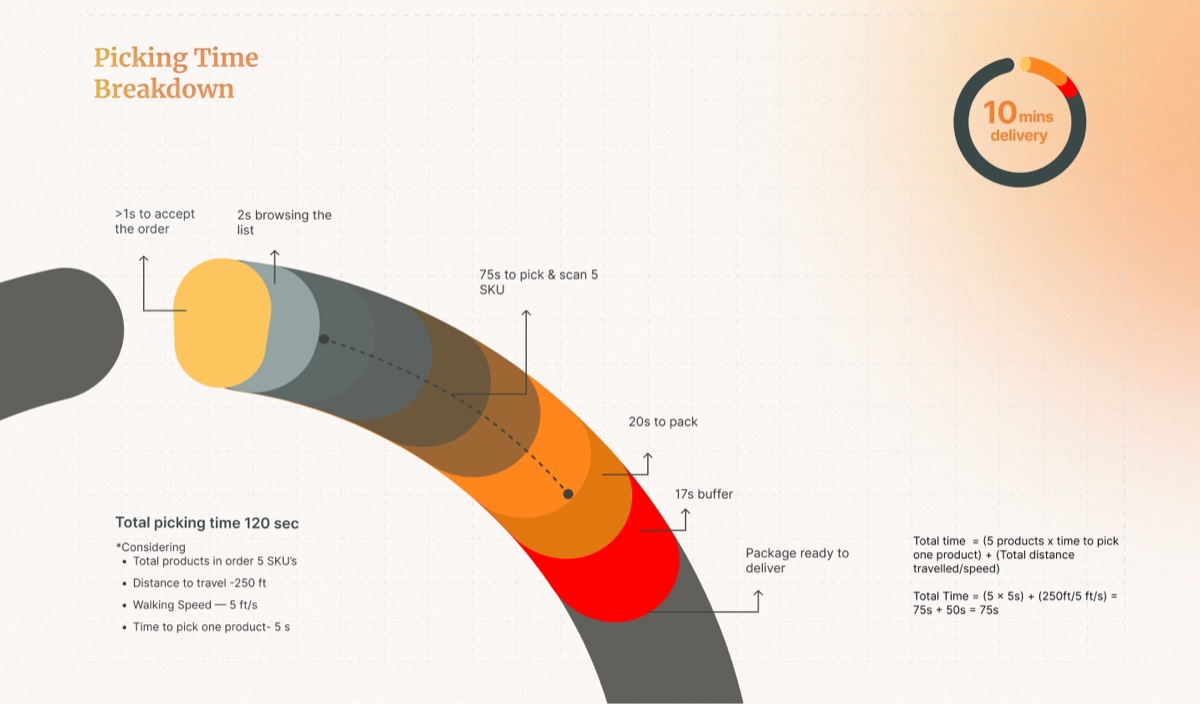
Order Completion Time: Pressure to complete the order within two minutes especially during peak hours. Micro delays and scanning errors further aggravate the time pressure
Unpredictable Workflow: The volume of orders can fluctuate unpredictably, leading to periods of overwhelming workload interspersed with short idle times.


Why study
Pickers?


Less Studied Workforce
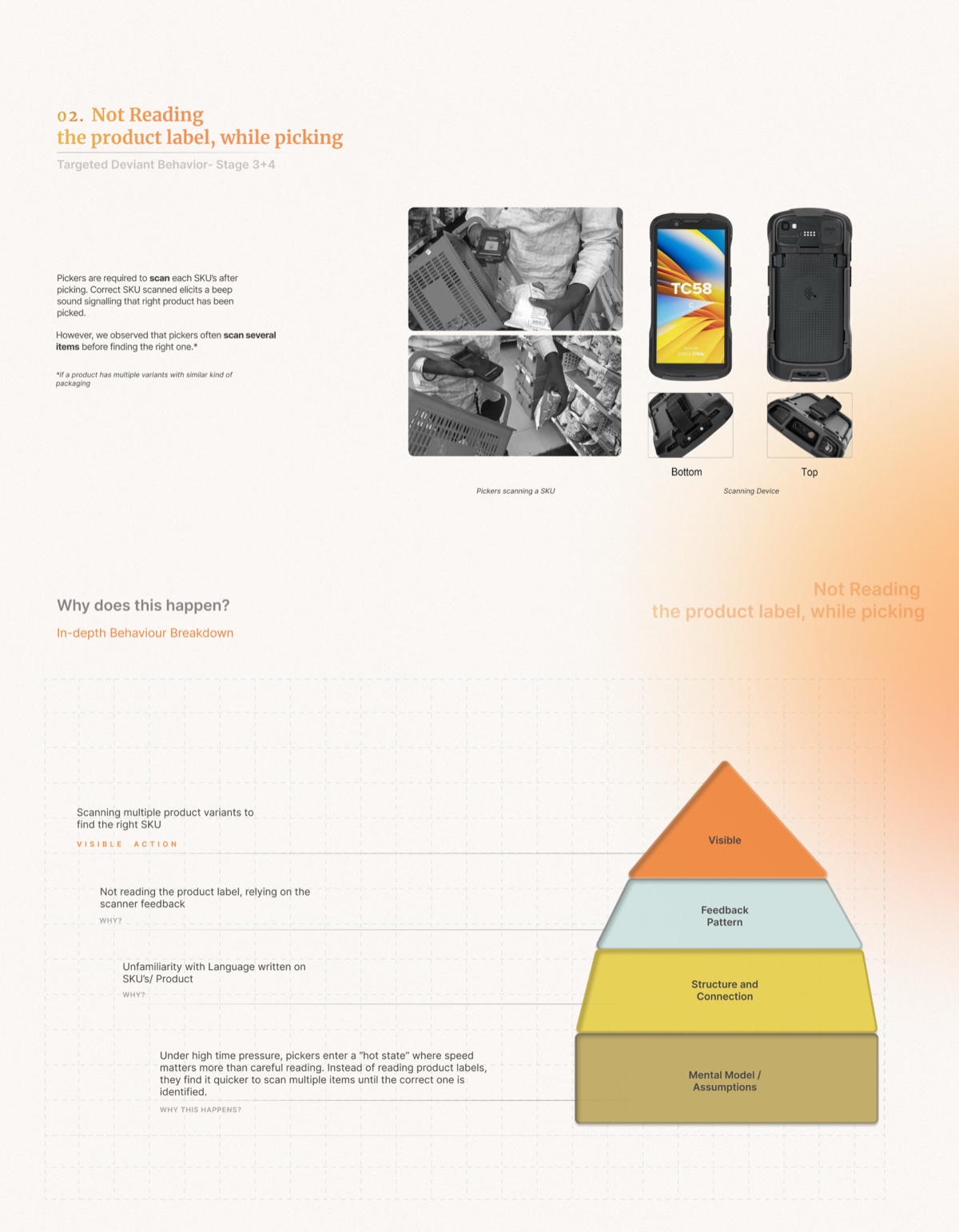
While delivery partners have been the focus of many research studies, pickers working behind closed warehouse doors remain an under-explored research area.
Direct Impact on Operational Efficiency
The success of 10-minute deliveries relies heavily on picking accuracy and speed. Optimizing picker workflows can reduce order turnaround time & employee wellbeing.
Multifaceted Workload
They offer a holistic study area for effective interventions. Strict order fulfilment deadlines create high-pressure working conditions, adding to the temporal, physical, cognitive, environmental.


Pickers Interviewed
Location
Star Pickers Interviewed (In-Depth)
6
Gandhinagar
*
*


2

Star Pickers are pickers who consistently collect SKUs faster than the assigned time and often top the daily picking order count.



Ravi Singh
Representative Archetype
About

20-30 yrs old

Vocational Training in Computer/ ITI

Urban dark store
(approx. 2800 sq. ft, 4000–5000 SKUs)

Picker- Swiggy Instamart
Gender: Predominantly Male
Demographic & Background
- Comes from a middle-class background in a semi-urban/urban locality.
- Completed basic education, comfortable with simple English words
- Chose this job over others for quicker earning opportunities.
- Seeks steady monthly income
- Has previously worked in informal or blue-collar sectors (retail, factory, delivery).
Resilient
Street Smart
Quick Thinker
Hardworking
Cooperative
Adaptable
Character Traits
Work Preferences
- Prefers a role that offers a clear task structure.
- Values autonomy in the workspace – likes moving around rather than being desk-bound.
- Optimizes time and energy to meet order quotas, often tracking performance incentives.
Pain Points
- Physical fatigue from long shifts of repetitive bending, lifting & walking .
- Mental strain due to constant audio alerts & multitasking.
- Often works under uncertain lighting or cramped shelving conditions.
- Time-bound tasks (2-7 minutes/order) contribute to a constantly heightened mental state(hot state).
- Lacks rest zones or amenities to recharge during short breaks.
- Limited opportunities for career progression
Handover



x3


Acknowledging
Registering
Picking
Bagging
Operants of Fulfilling an order
Their Entire job window is 2min
S-R-O Task analysis
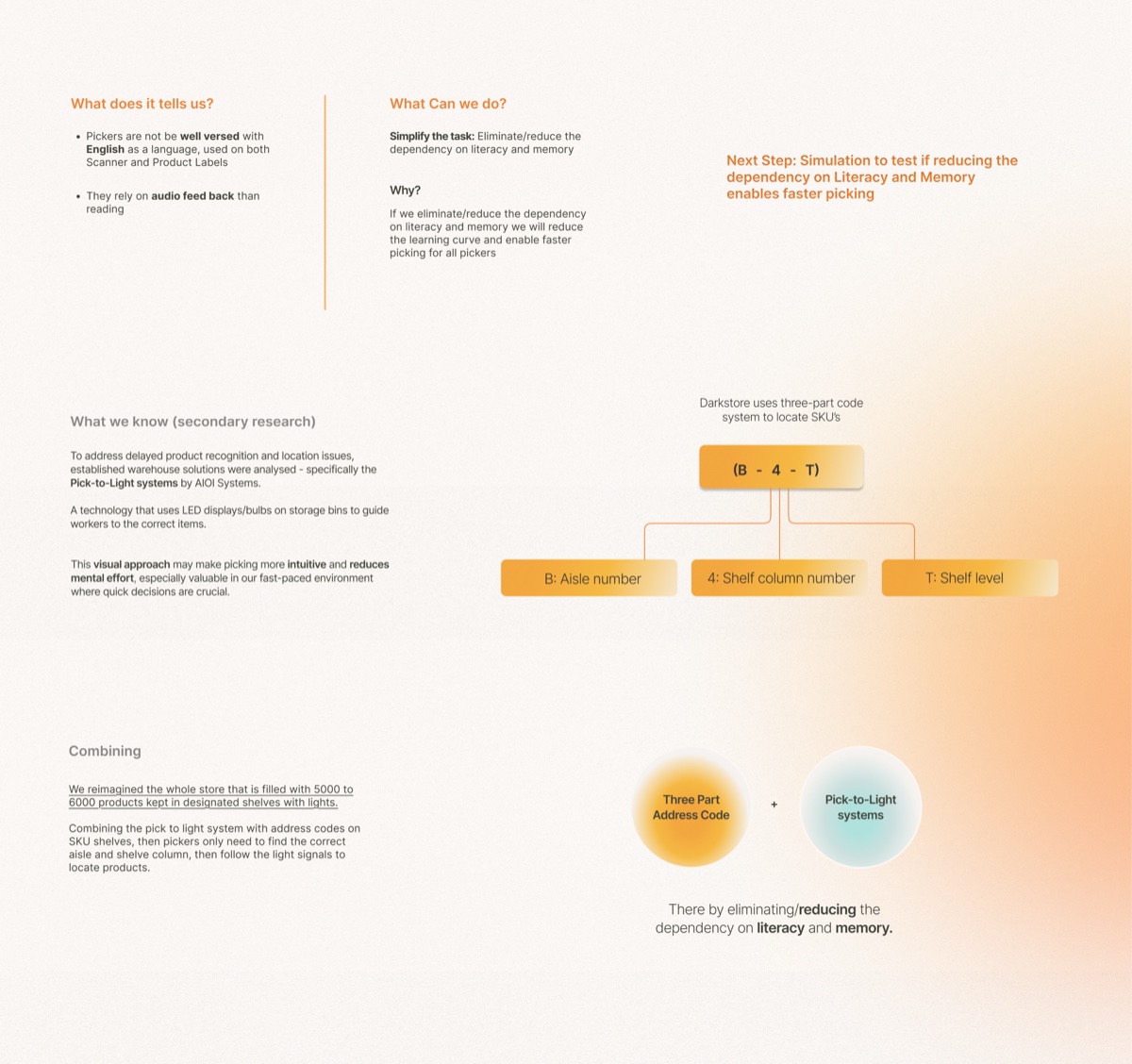
Breaking down SKU Picking task using Stimulus- Response-Outcome framework
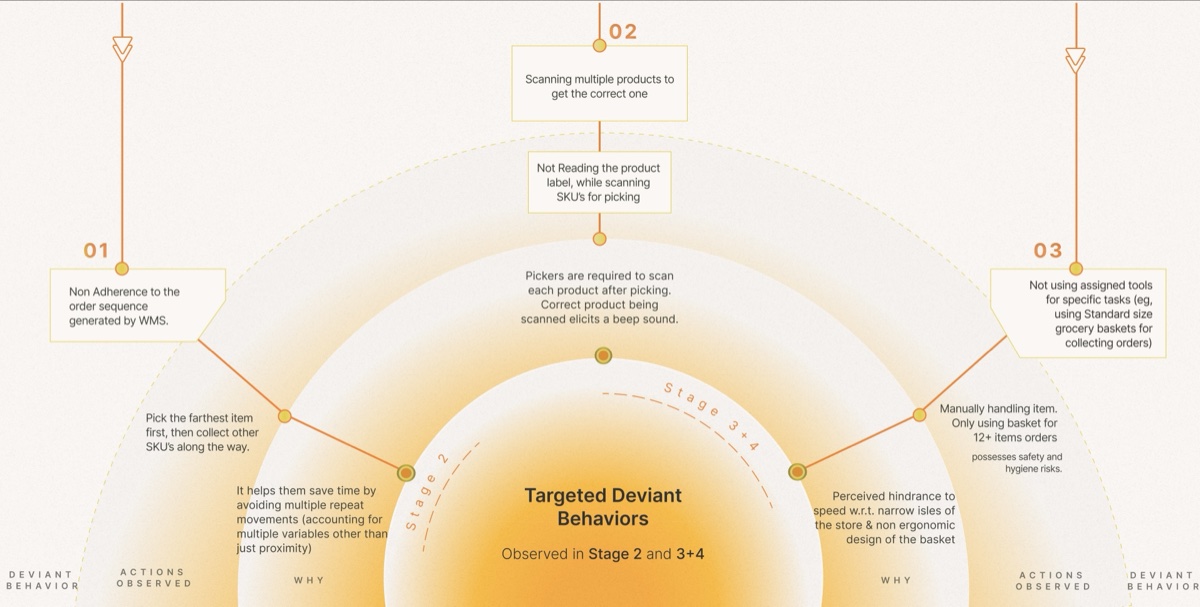
Two stimuli (Stage 2 and 3+4) eliciting multiple responses leading to instances of three deviant behaviors.
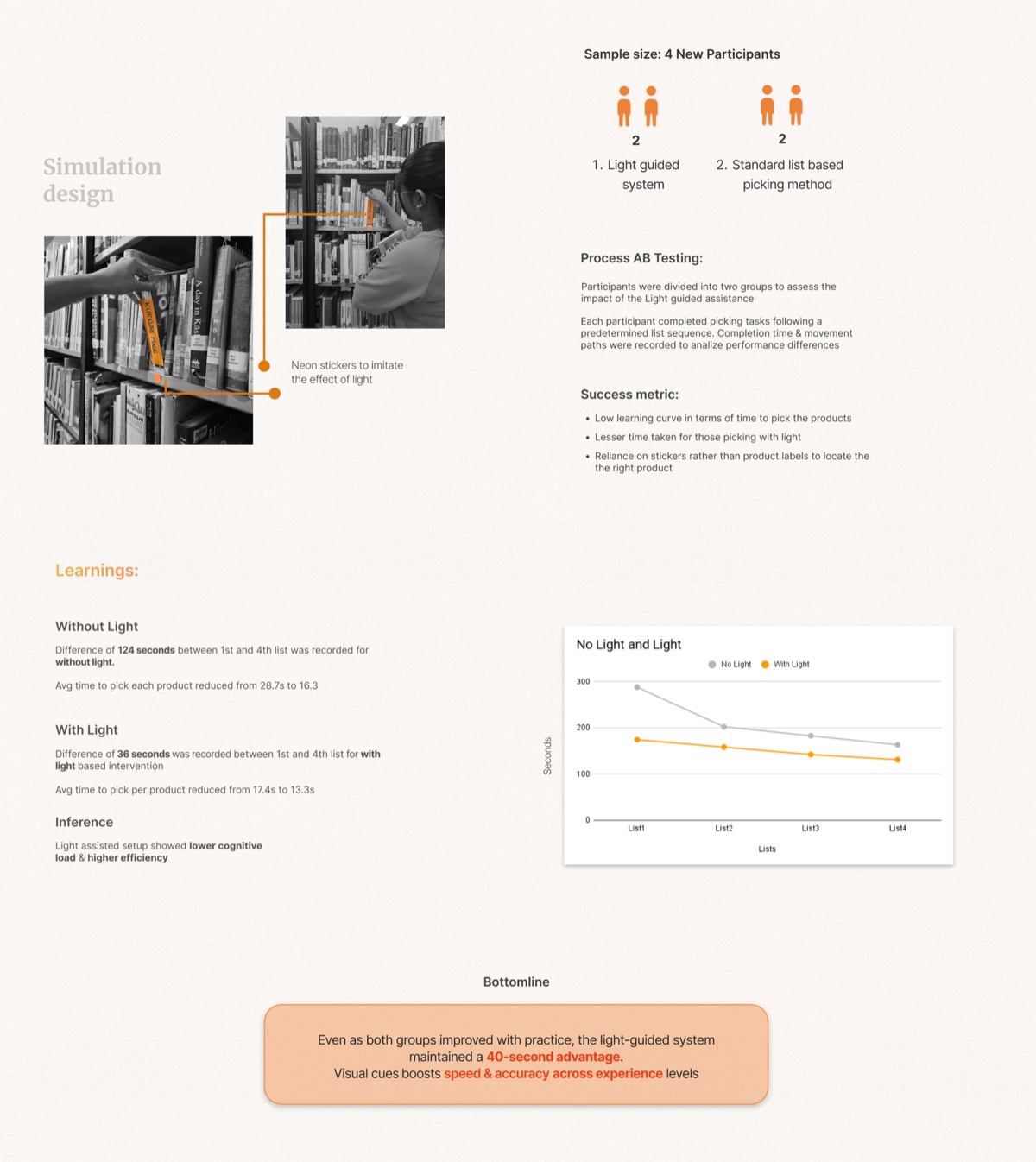
Findings